
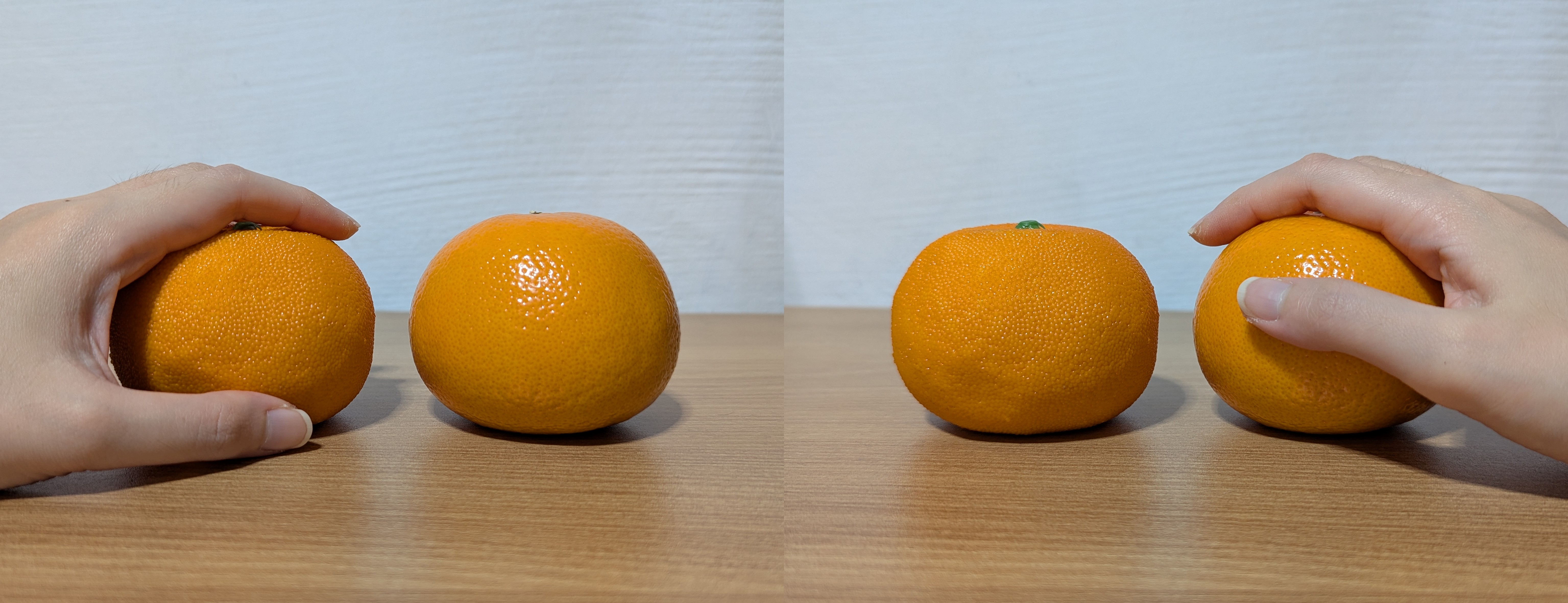
Haptic perception involves the interplay of the user’s sensory system, properties of the object, and how the user is interacting with the object. To create an immersive experience for the user, a haptic communicator should be able to achieve object realism (e.g., physically simulate object contours) and interaction realism (e.g., deliver impact or force feedback depending on the momentum of the object colliding with the user). Integral to such a haptic communicator is a haptic engine that accounts for the mechanics of the simulated interactions in order to synthesize coherent experiences.
Object realism – To create realistic haptic experiences, the haptic communicator should account for the simulated object’s haptically perceptible properties. Such properties include (but aren’t limited to) geometry, density, rigidity, and surface texture. In real life, we rely on our haptic perception of these properties to distinguish between objects that appear visually similar but very different otherwise (e.g., a real fruit versus a plastic lookalike), or perhaps to rummage for a known item in the dark.
Interaction realism – In addition to accounting for the simulated object’s relevant properties, it is also important to factor in how the user is interacting with the object. This determines which mode(s) of haptic feedback is more relevant and what magnitude to apply to simulate the haptic interaction. In real life, the same person can physically interact with the same object in many ways, resulting in many distinct haptic experiences. For example, picking up a ball at rest versus catching a moving ball.
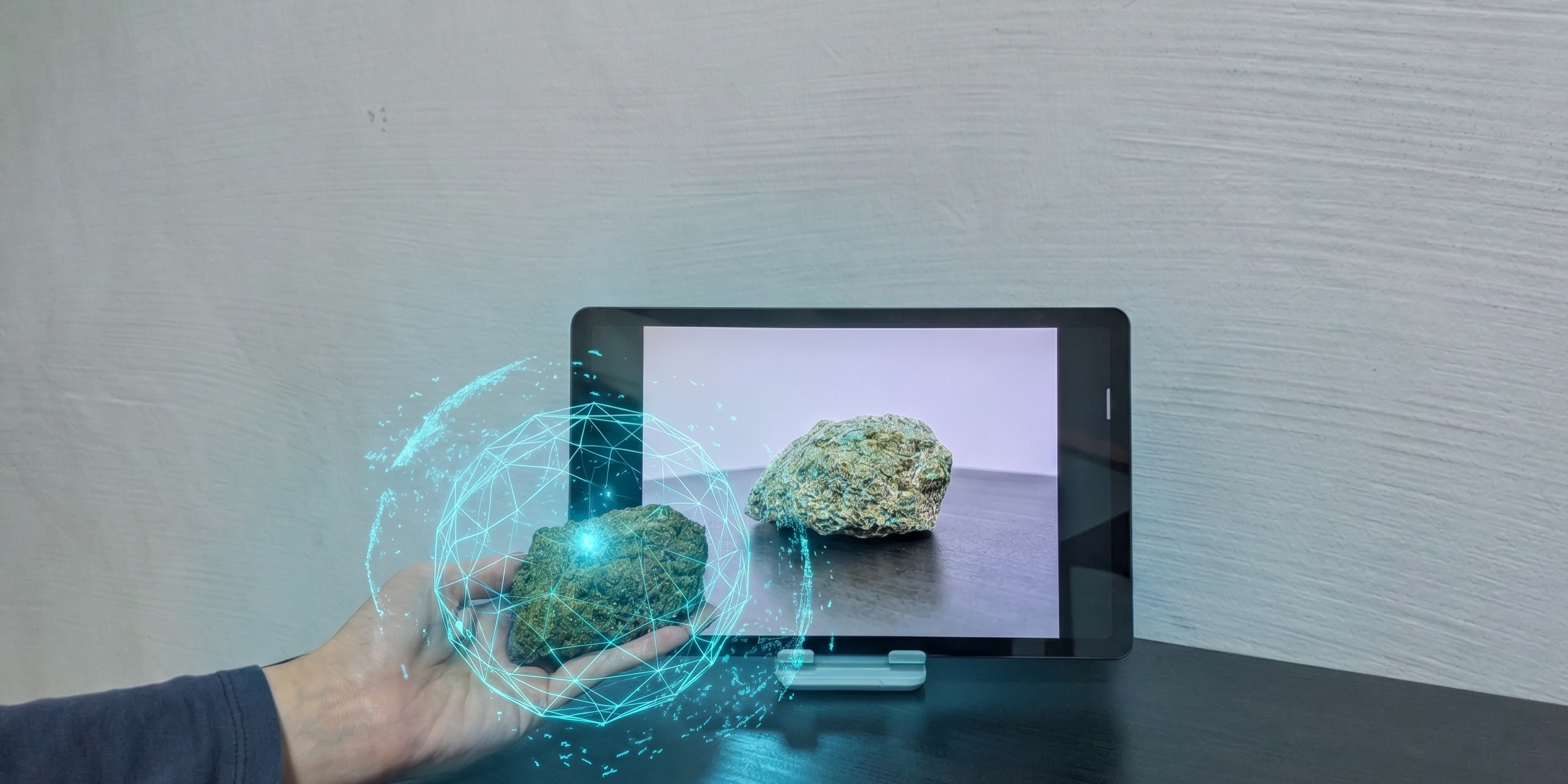
AI-driven haptic engine – Standard haptic controls rely on hardcoded, rigid mapping that requires developers to determine waveforms for each kind of actuator and haptic interaction. In complex virtual scenarios, with multiple players interacting with the virtual objects and one another, it becomes extremely challenging to achieve object realism and interaction realism due to the innumerable permutations, combinations, magnitudes, and directions of haptic interactions that could occur. This is where the AI-driven haptic engine offers practical value: the AI analyzes incoming telemetry (e.g., collision), predicts the optimal physical sensation, and automatically calculates the control signals for different hardware targets on the fly. This real-time abstraction enables a cohesive, multi-layered haptic experience without requiring massive, manual cross-platform coding.
